On Friday, January 10, 2025, block height 878,635, the curious@bitcoin channel asked a simple question on camera: BITCOIN SPACES | WHAT’S ROLLING OUT?
Fees were still small. Low priority around 6 sats per vbyte. Medium 8. High 9. Bitcoin was walking in the mid-90s, a crab between 90k and 100k. The host said $94,967 felt cheap if you wanted some. Then he did the thing that makes this tape different from a price stream. He walked into a grocery store.
Price on the shelf, ingredients in the fine print
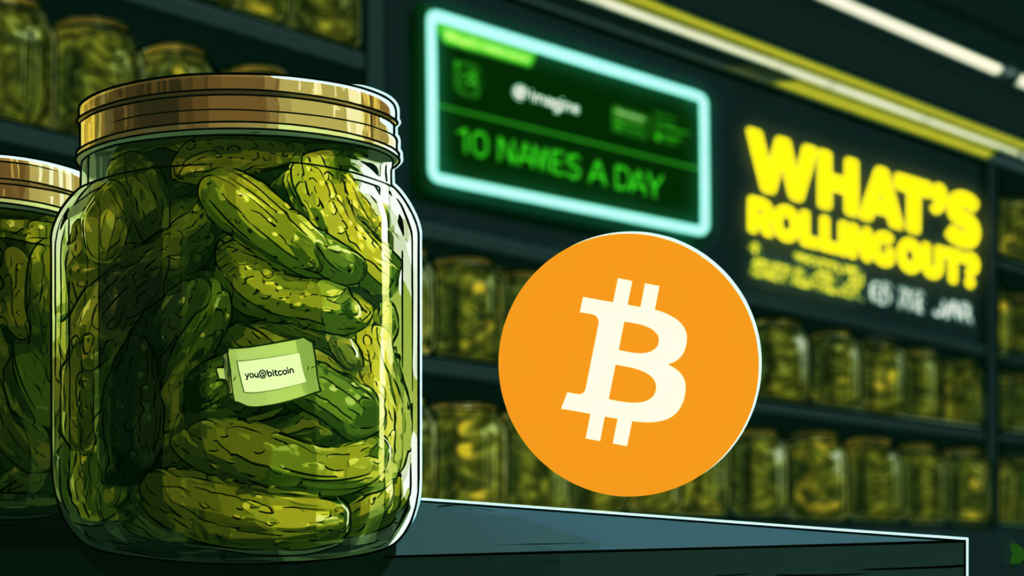
Stores print the dollar number huge. The ingredients hide. When he was younger he grabbed whatever was cheapest. He watched someone snatch pickles by the sale tag and never flip the jar. He looks at the list now. Whole food when he can. Price is nice when it is on sale. It is not the whole product.
He applied that to bitcoin. USD is the tag on the front. The properties of the money are the ingredients. If you like those properties, the crab walk in the 90s is not the story.
He applied it again, without needing a second speech, to Spaces Protocol. The explorer will always show a number: sats burned, sats bid, sats left on @imagine. That is the tag. The ingredients are how the names come into existence, who gets paid, and what you can do after the name exists.
One bitcoin burned, on purpose
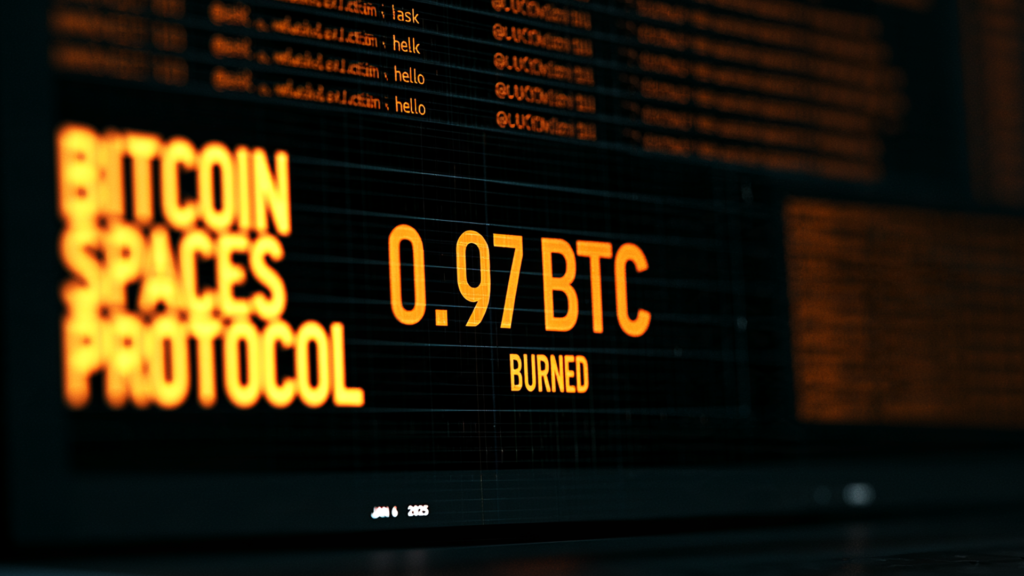
The show opened the Spaces board with a milestone. More than one whole bitcoin had been burned through the protocol. Locked away. Gone.
Some people hate the burn. The tape answers them the same way it answered the pickle aisle. Nobody owned these strings the morning before the auction. They are generated from scratch. Paying a person or a company to “create” a name that did not exist would have put a landlord at the mint. Paying miners a special cut would have given hashpower a side deal. The bid goes to no one.
Satoshi’s untouched pile is the rhyme on the show. A million coins that never move. A donation to the cap, whether anyone planned a speech about it or not. Spaces is not going to catch that number. It only burns when a new root is created. Ten roots a day. A few thousand a year. After that the name trades peer to peer. The marketplace the host kept pointing at is for those names, not for a second mint.
One bitcoin burned is a round number for a thumbnail. The ingredient is the rule: creation does not enrich a registrar.
Ten names a day is the rollout
What’s rolling out, in the narrow sense of that Friday, is a metered faucet of top-level Spaces.
Ten auctions a day. Not a genesis dump of every word in English. Not a pre-mine for a team. A clock. About 3,000 new roots a year if the cadence holds. That sounds small if you think every human needs their own @something. It is the point if you have watched naming systems where the entire dictionary vanished on day one.
@imagine was the live exhibit. 880,000 sats locked. Thirteen bids. Open for bidding and also sitting in a state where it could be claimed. Three days in a row, the host thought. On a hot name, claim is instant. People fight. People punch the button. @imagine just sat there. Maybe the leader went AFK. Maybe they did not know they were ahead. He joked that he would have to run space-cli list-spaces and find out it was him. Early markets look like that. The protocol was live enough for a name to wait on a human.
That is rollout too. Not a press release. A word on a board that anyone with a client can see.
What a Space is on that tape
The host kept saying these are more than domains. The description under the video says the same thing in the language the protocol uses.
Spaces Protocol: scalable, permissionless Bitcoin identities. A name anchored on Bitcoin. A handle you can carry across Nostr, wallet labels, peer-to-peer apps. No extra chain. No extra ticker in the pitch.
On January 10 the visible object was the root. @imagine. The thing you auction. The thing you claim. The thing you will later sell without burning again. The human-readable destination the description already named is the reason to care after the claim: a name you can say instead of bc1q and npub1.
The explorer is where you watch the clock. The identity is what the clock is for.
Fees, price, and why the show still opened on bitcoin
Six to nine sats per vbyte is not a Spaces statistic. It is why a burn auction on mainnet was even thinkable that week. Cheap block space makes a naming protocol that writes commitments to Bitcoin feel light. The USD print does not change the ingredients. It changes whether tourists show up to bid on @imagine.
The host’s line stands on both assets. Get some bitcoin if the sale tag looks good. Read the properties first. Get a Space if the name is one you will use. Read how it is born first. The burn, the ten-a-day cap, the peer-to-peer market after mint: those are the label on the jar.
The marketplace that comes after the fire
Once a Space is minted, the show said, bitcoin is not burned to move it. People will trade. A marketplace was coming. That is the second half of rollout.
Creation is the expensive, one-time, nobody-gets-paid step. Everything after is a name changing hands like any other object denominated in bitcoin. That split is how you keep the protocol from becoming a permanent tax on every transfer. It is also how speculators and users end up in the same object without a token in the middle.
If you only want a flip, you are looking at the price on @imagine. If you want the ingredient, you want a root that can carry identities: a handle, a payment label, a Nostr name, a pointer that does not live at a registrar.
Satoshi, supply, and the thing the protocol will not do
Will Spaces burn a million coins? The host doubted it on camera. Ten names a day is a throttle. Most of the life of a name happens after the fire. That is not a failure of the milestone. It is the design.
Satoshi’s coins are lost. Spaces coins are spent into nothing on purpose, only at birth, only for strings that had no owner. Congrats to the protocol, the tape says. Let it grow. Growing, on that Friday, meant more roots coming out under the same rule, more claims, more of the market that does not burn.
What the January 10 show was actually selling
Not $94k. Not six sats per vbyte. Not even the one-bitcoin trophy by itself.
It was selling a naming system that uses Bitcoin’s properties the way the pickle speech uses a jar. Limited new roots. No landlord at the mint. A visible auction. A claim that can sit if a human falls asleep. A future book of trade that leaves the fire behind.
What’s rolling out is that system on mainnet, ten words at a time, with the burn clock already past one whole coin.
If you like those ingredients, the explorer is the store. The name is the food.
Watch: BITCOIN SPACES | WHAT’S ROLLING OUT?
Protocol: spacesprotocol.org
Docs: docs.spacesprotocol.org
Explorer: explorer.spacesprotocol.org