Digital identity has always been rented. Whether it is a domain name, a social handle, or a login managed by a company, the pattern is the same: you are allowed to use it until someone with more power decides otherwise. In a recent discussion from the curious@bitcoin channel, the hosts explore what happens when names stop being permissions and become actual property. The conversation centers on Spaces Protocol and the idea that a human-readable name can live under the same rules that protect Bitcoin itself.
This is not a theoretical debate. It is a practical shift. Once a name is anchored to Bitcoin, the owner controls it with the same keys that control their bitcoin. No registrar, no platform, and no government can revoke it after the commitment is final. That single change turns identity from a service into an asset.Names Have Always Been Property. Digital Ones Just Weren’t
Intellectual property such as a patent is not something you can hold in your hand, yet the law treats it as valuable property. Brands work the same way. When people hear Nike or Coca-Cola, they instantly associate reputation, experience, and trust. Wells Fargo carries a similar weight for many customers: decades of relationship, loans, and reliability. The name itself carries value because people have built meaning around it.
Traditional digital names never received the same treatment. A .com or a social handle is closer to a lease. You pay or follow the rules, and the controlling entity can change the terms or remove the name. The speakers note the similarity to eminent domain: you are allowed to keep using the asset until the authority decides it is time to take it. Domain name systems operate under the same logic. Control sits with registries, registrars, and ultimately organizations that can be pressured or that simply change policy.
Bitcoin changes the foundation. Once ownership of a name is recorded as an unspent transaction output on the Bitcoin blockchain, the record is permanent under the protocol rules. The speakers emphasize that Bitcoin functions as the ultimate ledger and system of proof. People already timestamp important life events at specific block heights. A birth, the start of a business, or a commitment can be proven because the chain provides an unforgeable order of events. Applying the same mechanism to names means the right to a particular identifier cannot be altered after the fact by any single party.
How Spaces Protocol Turns Names Into Bitcoin Property
Spaces Protocol implements this idea without creating a new blockchain or altering Bitcoin. Top-level Spaces, written as @bitcoin or similar community identifiers, are distributed through open auctions conducted directly on Bitcoin. The highest bidder at the close of each auction receives the Space as a UTXO. Auction proceeds are burned. No foundation or company captures the value. Roughly ten Spaces become available each day, and the annual total is capped near 3,600. This scarcity and the permissionless auction process mirror the way Bitcoin itself distributes new coins.
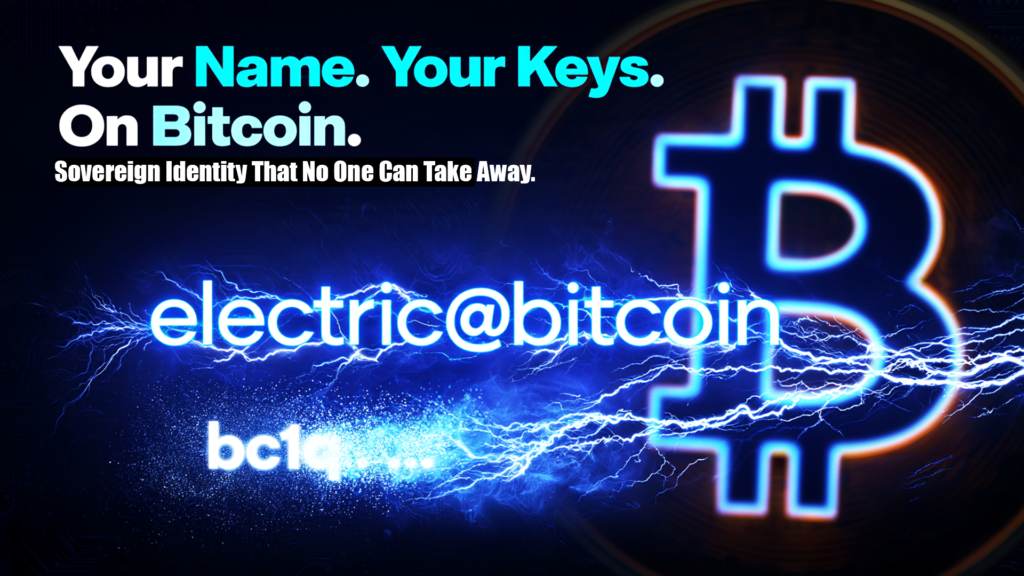
Once a party controls a top-level Space, they can issue handles beneath it, often called subspaces. Examples include alice@bitcoin or curious@bitcoin. These handles are created off-chain. The operator maintains a Merkle tree of issued names and periodically commits only the 32-byte root of that tree to Bitcoin. After the commitment confirms, each handle holder receives a certificate that proves both inclusion in the tree and that the name did not exist before. Anyone can verify the certificate against the Bitcoin chain. No central server needs to be trusted for the verification step.
The design keeps the on-chain footprint small. Everyday use of a handle does not require a new Bitcoin transaction for every update. At the same time, the holder can move the name fully on-chain later if they choose. The protocol is built so that zero-knowledge light clients can verify the relevant state without downloading the entire chain. This combination of minimal data and strong verifiability is what makes the system practical for ordinary users while remaining as secure as Bitcoin itself.
Why the Difference Matters in Practice
The conversation highlights the practical consequence of the model. With conventional domain names or platform handles, the user must hope the controlling organization continues to act in their interest. History shows that hope is not always justified. Accounts get suspended. Domains get seized under legal pressure. Policies change. In each case the user discovers that the name was never truly theirs.
A Spaces handle works differently. After the root commitment, the name is bound to the key the holder controls. No annual renewal fee is required for the handle. No registrar can refuse to continue the registration. The speakers point out that this is closer to owning land or gold than to renting a website. The Bitcoin network enforces the rules through proof of work. Changing the record would require rewriting the chain, the same barrier that protects any other Bitcoin UTXO.
This property has immediate uses. A person can publish a permanent contact card that lists a Nostr public key, an email address, a Lightning address, or a website. If a platform later bans the account, the Spaces name remains the authoritative place where others can find updated details. The verification does not depend on the original operator remaining online. Clients check the certificate and the Bitcoin root. The same name can appear in wallets, chat applications, and browsers that support the protocol.
Bitcoin as the Neutral System of Record
A recurring theme in the discussion is Bitcoin’s role as a neutral timestamp and proof system. Because anyone can verify the chain, events recorded there carry weight that no single company can claim. The speakers note that people already use block heights to prove when something happened. Extending that practice to identity is a natural next step. The name becomes part of the permanent public record without requiring the owner to store large amounts of data on-chain.
The conversation also touches on the ongoing debate about how much data Bitcoin should carry. OP_RETURN outputs are limited and prunable. Larger inscriptions raise questions about fees and chain growth. Spaces Protocol is designed around the small 32-byte root commitment precisely to avoid those pressures. The bulk of the name data stays off-chain, while the proof of ownership stays on-chain. This approach lets the system scale to large numbers of handles without forcing every user to pay for full on-chain storage.
From Rented Handles to Permanent Identity
The broader implication is a shift in how people think about their online presence. For decades the internet has treated names as services provided by intermediaries. Spaces Protocol treats them as property the owner can hold, transfer, or attach records to under cryptographic control. The result is a naming layer that inherits Bitcoin’s censorship resistance and longevity.
Adoption does not require every person to run a full node. Mobile apps such as Nacho already let users claim handles under existing Spaces. Wallets that support the protocol can display and resolve names. Explorers show live auctions and ownership. Because the verification is trustless, third parties can build applications that rely on the names without becoming new points of control.
The speakers make clear that the technology is still early. More tools, more integrations, and more education are needed. Yet the core property already exists: a name that cannot be taken away once the Bitcoin commitment is final. That property is what turns digital identity from a temporary permission into something closer to the lasting ownership people already expect from Bitcoin itself.
Getting Started with Sovereign Names
Anyone interested in the model can begin by examining the protocol documentation and the live explorer. Top-level Spaces continue to be auctioned on Bitcoin. Handles under popular Spaces are available through existing apps and marketplaces. The same keys that secure bitcoin can secure the name. No new token or separate chain is required.
The discussion ends on a practical note. Digital identity will keep evolving. Platforms will continue to offer convenience. The difference is that a parallel system now exists where the name is controlled by the holder and verified by Bitcoin. For people who already value self-custody of their money, the same standard can apply to the names they use every day.
Spaces Protocol Links
Spaces Protocol: https://spacesprotocol.org/
Explorer and Auctions: https://explorer.spacesprotocol.org/
Marketplace: https://spaces.market/
Nacho App (iOS and Android): https://nacho.io/
Bitcoin Handles: https://atbitcoin.com/
Akron Wallet: https://akron.io/
Orbee Chat: https://orbee.chat/
NIP-SPACES: https://github.com/buffrr/nips/blob/spaces/NIP-SPACES.md
GitHub: https://github.com/spacesprotocol